Monday, 17 February 2014

Half-Term Homework

Discuss the audience appeal of your three main texts [30].
My first television text is J.J. Abram’s ‘Lost’. Lost is a mainstream text and targets a popular and wide spread audience, known as a ‘mainstream audience’. Conventions of this particular text can be seen repeatedly throughout Lost, specifically in the scene where a group of people go for a hike in search for a radio signal. Camera shots like close-ups, high-angles and dutch angles are used along with non-diegetic sound to create enigma codes, which hook the audience into the programme. For example, in the scene where a group of six go for a hike in search for a radio signal, a non-diegetic ‘boom’ sound is heard, the noise exaggerated creating an enigma code as the audience do not know what made this sound, a straight cut to a tracking shot of something moving at a fast pace in the grass. This tracking shot is shot at a dutch angle creating another enigma code as the audience don’t know what animal this is. Fast paced, mid-shots and tracking shots are used to capture five of them running away into the jungle. A mid-shot is used to capture Sawyer (the sixth member of the group) pointing a gun towards this animal, the camera is positioned at a dutch angle creating uncertainty. Shot reverse shot is then used to capture Sawyer shooting towards the animal, then to the beast running towards him and back to Sawyer. Through the use of a close-up and the dialogue it is established that the animal running towards them was a Polar Bear. This is another enigma, as the audience are aware that Polar Bears don’t belong in that climate, leaving the audience questioning the text and becoming more entertained.                                                                                                
Various different enigma codes have been set up for the audience to follow within Lost, which leave the audience questioning the text and also hooking them in to discover the future events within the program. These enigma codes boost the appeal of the show to audiences as they offer a sense of gratification, social integration and entertainment. The mainstream audience who view ‘Lost’ take a passive viewing of the program, this is because, through the dialogue, they’re being told everything which results in the audience sitting back and taking the information that they’re being given without questioning it. An example of this would be in the opening scene of the second episode where a tracking shot is used to follow three characters, Charlie, Kate and Jack, as they walk through the jungle. Through the dialogue you can hear them talk about the plane crash, telling the audience straight away what has happened to them, resulting in a passive audience as they’re being told the action.
As well as through the mise-en-scene and the cinematography the audience appeal is boosted through websites which promote the show. The production company of Lost, ABC, stock Lost merchandise on their website, allowing fans of the show to buy t-shirts, DVDs, toys of the characters and more. As well as the merchandise you can find a section about Lost, linking different biographies of the characters that feature in the different seasons of Lost. Whilst researching I found various blogs dedicated into posting information, pictures and scenes from the Lost seasons. When looking at the articles on fan sites I have found that none of the fans post comments about certain episodes, which confirms the mass audience take the preferred reading and are being passive, not arguing with the different scenarios in Lost. However, the blogs boost the audience appeal to the show as other viewers can visit these sites and research more into the program.
My second text for this section is Mad Men, season 5 episode 11. Mad Men appeals to a niche audience, because the production company and the channel the program is shown on is ‘AMC’ an independent, American cable show. Audiences in Britain would have to subscribe in able to watch the show. The episode received directing and writing nominations at the 2012 Primetime Emmy Awards as well as Lead Actor, Lead Actress and Supporting Actress in a drama series. The episode also received critical acclaim from TV journalists, along with the nominations at the Emmy’s it boosts the audiences appeal to the program as it is shown to be successful. The advertising for season 5 of Mad Men was marketed by Sky Atlantic with the tag line “The four-time Emmy Winner is back” showing more of the audiences appeal as it shows that the program has won awards and has been nominated for them.
Through the mise-en-scene audiences may gain gratification from the program as the attention to detail shows clear representations of 1960s culture. Joan Harris- portrayed by Christina Hendricks- was styled to represent a typical female in the 60s. Her hair style, make-up and the way she dresses is typical to the time period as she has been styled to emphasize her ‘hour-glass figure’, with dresses that were pulled in at the waist; this was a body type women aimed for/ wanted in the 60s.  
“A top-notch episode full of closed-door talks and identity politics,” in Mad Men you can see references to identity politics, which you can also see within Sky Atlantic’s advertisement for the program. A wide shot is used to capture Jon Hamm’s character, Don Draper, looking into what appears (through the mise-en-scene) as a shop window. You can see that it is this character due to the reflection. In the window you can see a display of two mannequins, one male and one female. The male has been constructed to sit down, fully clothes on an old fashioned chair. The woman in the shot has no clothes on and has been constructed to represent women as sexual objects for male pleasure. The female mannequin is captured standing on a slightly raised platform in front of the male mannequin clearly showing men’s power over women during the 60s.
In terms of uses and gratifications, the audience would find escapism within the program as they’re learning about another time. This links with ‘retrophilia’ where the audience enjoy watching and learning things about the past. Retrophilia also links in with information that the audience would get from the program as it gives the audience authentic information on the 1960s due to the amount of detail within the program.
Within this episode we see Peggy Olson’s departure from the company, through research and looking at various fan websites and the guardian newspaper discussions, I found that audiences were shocked with this departure. In the episode a wide shot is used to capture Peggy waiting with contends from her desk for an elevator. The shot captures her smiling as you hear the non-diegetic music of ‘You really got me’ playing as she walks out of the frame. The music at the end of this shot was described as a “massive musical climax” on the Guardian’s page, the post then went on to say “This rush of rock’n’roll seemed significant, as if it was representative of all the exciting adventures yet to come for Peggy.” Audiences and fans of the show took to forums and blogs to post comments onto them discussing Peggy’s departure. Comments such as “Peggy’s departure came as a surprise” (the Guardian), show shock within the audience at Peggy’s departure and show that Mad Men is a character driven program rather than plot driven as the audience(s) follow the stories of the characters on the show. Compared to Lost, the fans of Mad Men are much more active as they discuss the scenarios that happen within the certain episodes on blogs with other fans. Some fans review and conduct a deep discussion on the program/ episode. For example ‘The Orange Couch’ looked at season 5 episode 11 on their YouTube channel and opened a deep discussion about themes and scenarios within that particular episode, confirming the audience of Mad Men take a more active role. These forums and blogs created by the fans offer them gratification and social integration as they can debate the themes within the program with others, which boosts the appeal of the program.
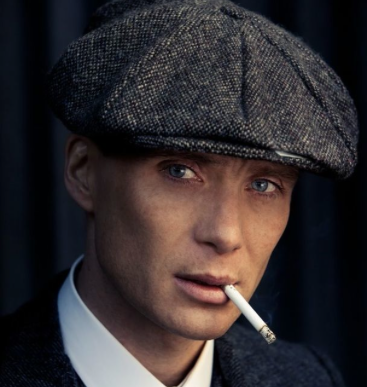
My third and final text for this section is Steven Knights ‘Peaky Blinders’. This crime drama, set in 1919, follows former World War One soldiers who have returned home and formed a criminal gang in Birmingham. The program aired on BBC Two, a channel which screens programmes targeting the arts, culture and drama and some comedy. These types of texts appeal to audience who aren’t already served by BBC One of ITV. Over its first 30 years the channel developed a reputation for screening highly praised and prestigious ‘high-brow’ drama series. A ‘high-brow’ text is rich in intelligence and culture. Peaky Blinders has elements of a high-brow text but it also contains mainstream conventions such as the music. The Peaky Blinders soundtrack includes contemporary artists such as Nick Cave and The White Stripes, this use of modern music intertwined within the program creates a post-modern program, it also boosts audience appeal as they may be fans of the artists
The text has been complemented for its high production value and cinematography. An active audience would take gratification from this as (cinematically) it resembles a movie. Peaky Blinders has been compared to the American Program ‘Boardwalk Empire’, as both programmes are stylistic, have film star casts, set in the past and are about crime. A negotiated audience would enjoy the text however would think that it lacks originality as it often seems to mirror some of the key narrative themes from Boardwalk Empire, the American text set in the same era. The text was also accused of giving up its artistic merit and realism for mainstream convention.
The cast of Peaky Blinders is another element which boosts the audiences appeal to the program as three of the actors are movie stars. Cillian Murphy who portrays ‘Tommy Shelby’ in Peaky Blinders is a well-known actor who has featured in films such as ‘Inception’ (2010), ‘The Dark Knight’ (2008) and ‘Batman Begins’ (2005). Award winning actor Sam Neill, portrays ‘Inspector Chester Campbell’ in Peaky Blinders. He is well known for his roles in ‘Jurassic Park’ (1993), ‘Jurassic Park III’ (2001), ‘The Piano’ (1993) and ‘The Hunt For Red October’ (1990). ‘Aunt Polly’ is portrayed by award winning actress Helen McCroy. McCroy is well known for her role as Draco Malfoy’s mother in the Harry Potter series as well as her roles in ‘Skyfall’ (2012) and ‘Hugo’ (2011). By casting films stars into the program, Peaky Blinders boosts its appeal as a wider audience made up of fans of these actors would have viewed the program.
The encoding and decoding model is a theory which Stuart Hall devised for an active audience which examines the relationship between a text and its audience. Encoding is the process by which a text is constructed by its producers and decoding is the process by which the audience reads, understands and interprets a text. Everything that is being shown to the audience has been constructed and encoded for them to decode. By encoding the text it allows the audience to participate and become more active with the text which gratifies them, letting them go to forums and chat rooms and discuss the text with others.

In response to Peaky Blinders, audiences and fans took to forums and blogs to discuss the program. BBC Two also have a web page dedicated to Peaky Blinders. Information on the cast, music as well as clips and articles are linked onto this website allowing the audience to research more into this program and become a more active audience. It also keeps them updated about the second series that is soon to be released.

Thursday, 6 February 2014

Peaky Blinders Response

How has your chosen media text attracted its audience? 

Steven Knights Peaky Blinders is a crime drama, set in 1919, which follows former world war one soldiers who have returned home and formed a criminal gang in Birmingham. The program aired on BBC Two, a channel which screens programmes targeting the arts, culture, drama and some comedy. These types of texts appeal to audiences who aren't already served by BBC One or ITV. Over its first 30 years the channel developed a reputation for screening highly praised and prestigious 'high brow' drama series.

A 'high brow' text is rich in intelligence and culture. Peaky Blinders has elements of a high brow text but also contains mainstream conventions such as the music. The Peaky Blinders soundtrack includes contemporary artists such as Nick Cave and The White Stripes, this use of modern music within the program could attract the audience as they may be fans of the artists and or it brings a post modern element.
The text has been complemented for its high production value and cinematography. An active audience would take gratification from this as (cinematically) it would remind them of a movie.
Peaky Blinders has been compared to the American program 'Boardwalk Empire', as both programmes are stylistic, have film star casts, set in the past and are about crime. A negotiated audience would enjoy the text however would think that it lacks originality and often seems to mirror some of the key narrative themes of Boardwalk Empire, the American text set in the same era. The text was also accused of giving up its artistic merit and realism for mainstream convention.

The cast of Peaky Blinders is another aspect of the program which attracts the audience as the cast consists of 3 stars.

Cillian Murphy portrays 'Tommy' in Peaky Blinders and is a well know actor. His filmography includes Inception (2010), The Dark Knight (2008), Batman Begins (2005) and 28 Days Later (2002).


Award winning actor Sam Neill, portrays 'Inspector Chester Campbell' in Peaky Blinders. He's known for Jurassic Park (1993), Jurassic Park III (2001), The Piano (1993) and The Hunt For Red October (1990).


'Aunt Polly' is portrayed by award winning actress Helen McCroy. McCroy is well known for her role as Draco Malfoy's mother in the Harry Potter series as well as her roles in Skyfall (2012) and Hugo (2011).

By casting film stars into the program, Peaky Blinders would have attracted a wider audience made up of these stars' fans who follow their career(s).

Audiences in the 1920s weren't as active compared to recent years as modern technology allows the audience nowadays to practise more creating a much more active audience.

In response to Peaky Blinders audiences and fans of the program took to forums/ chat rooms on the internet to discuss the issues within the program.

The encoding and decoding model is a theory which Stuart Hall devised for an active audience which examines the relationship between a text and its audience. Encoding is the process by which a text is constructed by its producers and decoding is the process by which the audience reads, understands and interprets a text. Everything that is being shown to the audience has been constructed and encoded for them to decode. By encoding the text it allows the audience to participate and become more active with the text which gratifies them, letting them go to forums and chat rooms and discuss the text with others.

BBC Two also have a web page dedicated to Peaky Blinders. Information on the cast, music as well as clips and articles are linked onto this website allowing the audience to research more into this program and become a more active audience. It also keeps them updated about the second series that is soon to be released.


Thursday, 30 January 2014

Lost exam response

B4. 'Most media texts target a range of different audiences.' How true is this for your chosen texts?

'Lost' is a mainstream text and targets a popular and wide spread audience, which is know as a 'mainstream audience'. Conventions of a mainstream text can be seen repeatedly throughout Lost.
Conventions of this particular text can be seen specifically in the scene where a group of people go for a hike in search for a radio signal where they can send a signal for help. A high angle is used to capture the group walking through the jungle, non-diegetic sound can be heard quietly of a high pitched frequency creating uncertainty within the audience and also creating an enigma.

A non-diegetic 'boom' sound is then heard, the noise is exaggerated creating another enigma code, cuts to a tracking shot of this animal capturing the grass, implying that there is something running towards the group. Fast paced mid-shots and tracking shots are used to capture Sayid, Kate, Charlie, Shannon and Boone running away through the jungle. A mid-shot is then used to capture Sawyer pointing a gun towards the animal, the camera is positioned at a slight dutch angle creating uncertainty about what will happen next. Shot reverse shot is then used to capture Sawyer shooting towards the animal then to the beast running towards him and then back to Sawyer.
Through the use of a close-up and through the dialogue its established that the animal running towards them was a Polar Bear. This is another enigma, as the audience know that a Polar bear doesn't belong in that climate which leaves the audience questioning the text and being more entertained.

Within Lost various different enigma codes have been set up for the audience to follow. The enigma codes leave the audience questioning the text and also hooks them in to find out what's going to happen next to the characters.

The mainstream audience who view 'Lost' are taking a passive viewing of the programme, this is because they're being told everything (through the dialogue) which results in the audience just sitting back and taking the information they're being given. For example during the opening scene of Lost you're introduced to three of the characters, Charlie, Kate and Jack. A tracking shot is used to follow the three as they walk through a jungle- you can tell their location through the mise-en-scene. Through the dialogue you hear them talk about a plane crash, this tells the audience whats happened to them, resulting in a more passive audience as they're being told the action.

The program Lost is a mainstream text, you can tell this as on the production's website (ABC) they stock Lost merchandise. Where fans of the show can go and buy t-shirts, DVDs, toys of the characters and more. Also on the website you can find a section about Lost, which links to different bio's of the characters that appeared throughout the seasons. Whilst researching about the audiences response to Lost, I came across a website/ blog created by fans of the program. The site called 'LOST MEDIA' allows fans to post comments about certain episodes and to blog/ post about things that link with program and the stars. When looking at the articles on fan sites I have found that non of the fans post comments about certain episode posts, which shows/ confirms that the mass audience take the preferred reading and are being passive as they are not arguing with different scenarios that happen within Lost.

Tuesday, 28 January 2014

Mad Men response

B1. Discuss the audience appeal of your three main texts. [30]

Mad Men, season 5 episode 11 appeals to a niche audience. This is because the production and the channel it is shown on is 'AMC' an American cable show. Audiences in Britain would have to subscribe in able to watch Mad Men. The episode received directing and writing nominations at the 2012 Primetime Emmy Awards as well as Lead Actor, Lead Actress and Supporting Actress in a drama series. The episode also received critical acclaim from TV journalists along with nominations at the Emmy's it boosts the audiences appeal as it shows the show is successful.
The advertising for season 5 of Mad Men was marketed by Sky Atlantic with the tag line "The four-time Emmy Winner is back" showing more of the audiences appeal as it shows that the program has won awards and been nominated for them.

Through the mise-en-scene you can see clear representations of the 1960s because of the attention to detail. Joan Harris portrayed by Christina Hendricks was styled to represent a female within the 60s.  Her hair style and make up is typical to the time period as well as the way she dresses. She has been styled to emphasise her 'hour-glass' figure, which is shown through her flattering dresses which cling to her body- going in at the waist. The hour-glass figure of hers is one that women during the 60s wanted.
"A top-notch episode full of closed-door talks and identity politics," in Mad Men you can see references to identity politics, you can also see this within Sky Atlantics advertisement for the program. A wide shot is used to capture Jon Hamm's character, Don Draper, looking into what appears (through the mise-en-scene) as a shop window. You can see that it's Jon Draper looking into the window as you can see his reflection in the window. In the shop window there's a display of two mannequins, one male and one female. The male is constructed sitting down fully clothed on an old fashioned chair, the woman has no clothes on and has been constructed to represent women as sexual objects. The female mannequin is captured standing on a slightly raised platform in front of the male mannequin clearly showing men's power over women during the 60s.

In terms of uses and gratifications, the audience would find escapism within the program as they're learning about another time. This links with 'retrophilia' where the audience enjoy watching and learning things about the past. Retrophilia also links in with information that the audience would get from the program as it gives the audience authentic information on the 1960s due to the amount of detail within the program.

Within this episode we see Peggy Olson's departure from the company, through research and looking at various fan websites and the guardian newspaper discussions I found that audiences were shocked with this departure. In the episode a wide shot is used to capture Peggy waiting with contents from her desk for an elevator. The shot captures her smiling as you hear non-diegetic music "You really got me" playing as she walks out of the frame. The music at the end of this shot was described as "a massive musical climax" on the Guardian's page the post then went on to say "This rush of rock'n'roll seemed significant, as if it was representative of all the exciting adventures yet to come for Peggy."

Audiences/ fans of the show took to forums and blogs and posted comments such as "Peggy's departure came as a surprise" (the Guardian), "There’s a lot to process here, but I’m going to start with the obvious. Peggy Olson! WTF," (fans blog). These comments show shock within the audience at Peggy's departure and show that Mad Men is character driven rather than plot driven as the audience(s) follow the stories of the characters on the show. Compared to Lost, the fans of Mad Men are much more active as they discuss the scenarios that happen within certain episodes on blogs with other fans. Some fans review and conduct a deep discussion on the program/ episode. For example 'The Orange Couch' looked at season 5 episode 11 on their YouTube channel and opened a deep discussion about the themes and scenarios within that particular episode showing/ confirming the audience of Mad Men take a more active role.
The forums and blogs created by the fans offer them gratification and social integration as they can debate the themes within the program with others which could boost the appeal of the show.

Tuesday, 14 January 2014

Drive and Film Noir

Throughout the film 'Drive' directed by Nicolas Winding Refn you can see conventions of the genre  'Film Noir'. These can be see through the characters, mise-en-scene and cinematography.

The characters in the film are typical of the noir genre. The main protagonist, Driver, portrayed by Ryan Gosling, is a cynical character within the film- a character linked with the Noir genre. He's represented as hard heated, lonely, a 'cold' character and physically tough, these representations are seen through the mise-en-scene.  During the scene where Driver is having dinner with Irene, her son and her husband you see through the mise-en-scene that Driver is represented as a 'cold' character. He is captured using a mid-shot capturing him sitting at the dinner table, the wallpaper behind him is a light blue colour which reflects a tone of blue onto him representing him as a cold character. This representation also links with the cynical protagonist common in the noir genre as they can be described as 'cold-hearted'. Irene is captured differently in this scene, she is captured as a warmer person. Through the use of mise-en-scene and the lighting a brown/ red, warm light is reflected onto her showing a contrast between the two.

Here you can see that Driver is a cold character and Irene a warmer character (mise-en-scene of the wallpaper and the light)
Another character captured in Film Noir is the 'femme fatale,' Blanche can be considered as the femme fatale in Drive, through the mise-en-scene you can see conventions of a femme fatale. Blanch is introduced whilst Driver is talking and organising the robbing of the pawn shop, (they need $10,000 in order to protect Irene and her son and to get Standard out of this area of work). Blanche (femme fatale) is captured using a slight low angle showing she is a character with power. Conventions of a femme fatale have been projected onto Blanche through the use of mise-en-scene. She is seen smoking, wearing red lipstick and also has red-hair, the colour red has connotations of passion and danger, connotations which are found in femme fatale's from the 1950s- 60s.

Close-up is used to capture the femme fatale smoking 


Femme fatale's can be seen in 2005 film 'Sin City' directed by Frank Miller, Robert Rodriguez and Quentin Tarantino (guest director). During the opening scene of Sin City you see a typical femme fatale found in the noir genre. You can see this through the use of mise-en-scene, she is captured using a high-angle as she walks to the end of the balcony of the skyscraper- you can tell this is the location as the high angle also shows other skyscrapers and urban life. This scene (and the whole film) has been edited into black and white filter to resemble that of a comic book however, bold colours are seen in appropriate places. In this scene you can see an example of this use of colour as to capture the femme fatale and her characteristics her dress is bright  red- connotations of passion and danger, then a close-up is used to capture her smoking and here you see she is wearing red lipstick another convention of the femme fatale in noir.

Close-up used to capture the femme fatale smoking also see red lipstick, similar to the shot used in 'Drive' to capture Blanche (example of shot above).
This is the high angle used to capture femme fatale on the balcony on the skyscraper.

During the scene in Drive where the robbery of the pawn shop takes place, another convention of noir can be seen- the use of neon lights/ signs. The sets of film noir films have a gloomy feel, low key lighting, venesian-blinds used to keep out the sunlight, dark alleys and streets are conventions of the film noir genre. These contrast with the neon signs which were a popular aspect within the genre.
Neon signs can be found in urban environments. In this particular scene (in Drive) they are shown in a shop window which is located in a grimy location. In Sin City neon lights can be seen in shop windows however they are most commonly seen as signs to strip-clubs and pubs within the city. There locations are also grimy and urban like the location of the pawn shop in Drive.


Characters and Representations of District 9


Wikus

His representation at the start is that he is a bit of a Geek and a pen pusher. Through the mise-en-scene you can see this as he wears stereotypical clothes that a 'geek' would commonly wear- a sweater vest, shirt and tie with his hair styled to the side sprayed onto his head using gel. Wikus is married to the daughter of the boss of the MNU, this shows that the only way Wikus has got this job is due to nepotism. He can be represented as a hero in parts of the film however not throughout. He helps Christopher get to the smaller ship (where his son is) that will take him up to the mothership which will enable him to go and save his people and then fix Wikus. Wikus could be considered the donor at the end of the film as he gives Christopher the fuel to go back to the mothership. He could also be considered as the helper when he is defending Christopher and son when they start the ship and go back to the mothership. 


Christopher

Christopher is the true hero of the film as he is the one who goes and wants to save and help his people. He can also be seen as a religious character  as through his actions and the mise-en-scene he resembles Christ. Christopher wants what is best for his people/ species and you hear him in the film talk to Wikus about helping him after he saves his species first. This conversation is captured using a wide shot to show Christopher and Wikus talking about using fuel to return to Christophers birth planet where he can help Wikus. When the two are in the government building, Christopher is captured using a wide shot as he looks at a Prawn who has been killed and is an experiment which the humans have been looking at. Close-up/ mid-shots are used to capture the humans/ army people shooting towards Wikus and Christopher but Christopher is captured using a wide shot as he looks down at the dead Prawn. The bullets miss Christopher suggesting a miracle by God/ he resembles Christ. 
The scene where you see Christopher and his son fly off to the mothership a low angle is used to capture the smaller ship on its way to the mothership. Through the miss-en-scene you see that the ship is in the shape of a cross which also resembles Christ. 


Tania 

Tania is Wikus's wife and also is Wikus's boss's daughter- this is how Wikus got the job at MNU.
In terms of Todorov's folk tale theory, Tania is represented as the 'Princess'.

Christopher's Son 

In District 9 Christopher resembles Christ within the narrative, also making his son a religious character. In terms of Todorov's folk tale theory, Christopher's son would be considered the helper as he assists his father throughout the film, when preparing the ship and helping Wikus. 


Sunday, 13 October 2013

How do your chosen texts use genre conventions?- Sin City

The text that I am going to discuss is 2005 mainstream film, 'Sin City.' The three main genres that you see throughout the film are film noir, comic book and horror.


The opening scene in this film reveals a man and a woman standing on a balcony in the city. 
 In the genre, film noir, there are different character roles. The mise-en-scene represents the woman as a 'femme fatale,' she is seen wearing a long red dress, red lipstick, she seems to have light hair and is seen smoking. The red colour connotations suggest danger, which is a characteristic that the femme fatale has aswell as being beautiful and dishonest. 


 At the beginning of the scene you see the femme fatale walking to the edge of the balcony in the city. She is shot at a high angle suggesting powerlessness, which could also suggest that whatever mission or goal she was aiming to achieve was unsuccessful. This is where you see a contrast between her red dress against the black and white of surroundings. The high angle also reveals her surroundings and shows her in an urban environment and shows the skyscrapers and buildings in the city. 
The character roles that feature in film noir films could be classed as genre conventions because specific characters, such as the femme fatale, are a common feature in the films. In this film you see various different examples of femme fatale's, they are shown in the different stories that are being told. 


You can hear non-diegetic Jazz music in the background, this is a common convention of the film noir genre because film noir films were originally created in the 40's where Jazz music was popular. The Jazz music is used in this scene to create a 'romantic' atmosphere between the femme fatale and the male protagonist. The jazz music also suggests a happy ending for the two. But this is not the case as later on in the sequence you see him shoot her- resulting in her death.

You hear the male protagonist before you see him in this scene. A voice over is used to narrate what is happening in this scene and it's also used for different characters I'm the film. Voice overs are also a common convention in film noir films and are used to explain a protagonists past and personality. The narration and self-reflection gives a clear idea of the characters ideology and background. 
A convention of the comic book genre is seen in the sequence, when they're kissing- the shot becomes black and white and the two become white silhouettes.


Also when the male protagonist shoots the femme fatale you see a slight white flash and the sound is over-exaggerated. When it starts to rain this is both pathetic fallacy and a convention of the comic book genre because the rain drops that create ripples in the puddles are exaggerated.
 The camera then zooms out and rotates 360° to reveal the title. 

During the character Marv's story you see conventions of the horror genre. Due to the death of his lover,Goldie, Marv seeks revenge on the killer. Marv soon confronts Kevin. 

You first see Kevin when the camera pans around Marv who is inspecting something off of the floor, the camera pans around and reveals Kevin standing behind Marv. The low key lighting creates shadows across Kevin's face making his facial features unknown. Having Kevin's face cast in shadow is a convention of the horror genre as his identity is unknown creating a sense of unease within the audience. In horror films there is a character that is demon-like and evil, through the use of mise-en-scene and the way Kevin is shot (technically) suggests he is the demon. 


Then it cuts to a close up of Kevin's face, revealing his eyes. The rest of his facial features are still cast in shadow, keeping up with his unknown status. A slight zoom is then used on the face to create tension. A close up is also used to show Kevin's hands, revealing claw-like nails suggesting animal-like behaviour.


Later on in this sequence you see Marv locked up in a basement of an old building, with a window on the wall. The window has bars across it showing Marv's entrapment. Horror conventions can be seen in this room as there is a close up of women's heads mounted upon the wall with blood still around their necks. You later find out that these women have been eaten by Kevin. This could be linked with the close up you see before of his claw-like nails that represent him as an animal. The non-diegetic sound used here creates unease and sickness towards the villain who actually killed Goldie- Kevin. 

Later on you see comic book violence of Kevin being eaten by his pet, who he fed the scraps and the bones of the women. A similar technique is used before showing the silhouette of the action in the first scene. 

The three genres you see in this film show their conventions through the mise-en-scene, iconic/ similar traits from films before (e.g. voice over narrative and Jazz music) and through the technical aspects. They're used to create representations of characters and to create an impact on the audience.